


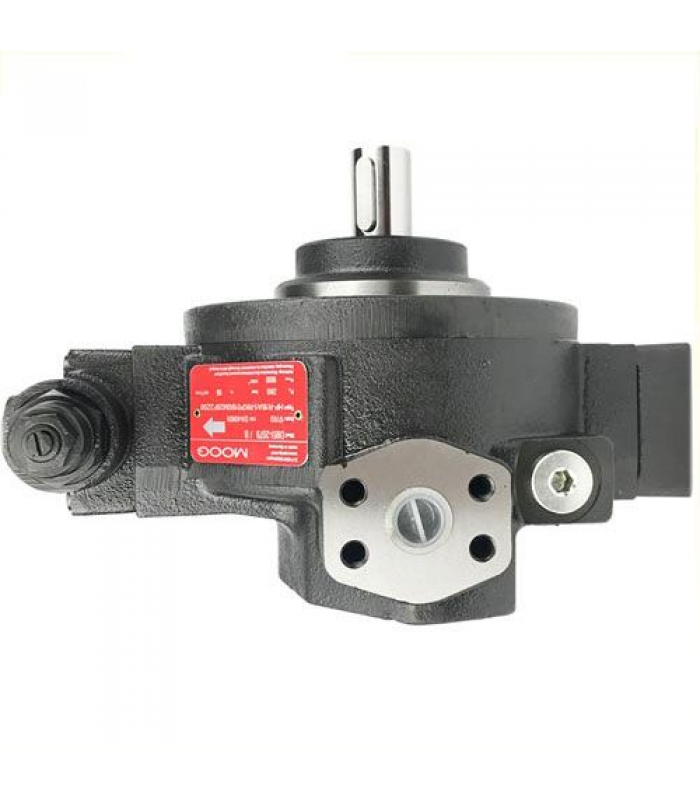
MOOG D955-2101 Servo Valve Wei
- Product Code: D955-2101
- Availability: In Stock
MOOG D955-2101 Servo Valve Technical Documentation
Part Number: D955-2101/D HP-R18A7-RKP080KE12C1Z00
1. Overview
The MOOG D955-2101 is a high-performance servo valve designed for precise control of hydraulic systems. It belongs to MOOG's D955 series of servo valves, which are known for their reliability, accuracy, and durability in industrial applications.
This servo valve utilizes a two-stage design with a torque motor-driven pilot stage and a sliding spool main stage. The integrated feedback mechanism ensures accurate positioning and excellent dynamic response, making it suitable for applications requiring precise control of position, velocity, or force.
The D955-2101 servo valve is commonly used in industrial machinery, aerospace systems, power generation, and other critical applications where precise hydraulic control is essential.
2. Specifications
Hydraulic Specifications
| Maximum Operating Pressure | 350 bar (5,000 psi) |
| Rated Flow | 0-225 l/min (0-60 gpm) at Δp 70 bar |
| Flow Gain | 5-50 l/min per volt (typical) |
| Leakage | Less than 1.5 l/min at 350 bar |
| Operating Temperature Range | -20°C to +70°C (-4°F to +158°F) |
| Hydraulic Fluid | Mineral oil, phosphate ester, water-glycol |
Electrical Specifications
| Input Signal | ±10 VDC, ±20 mA, or ±50 mA |
| Coil Resistance | 10-200 ohms (depending on configuration) |
| Coil Inductance | 5-50 mH (depending on configuration) |
| Power Consumption | 1-5 watts (depending on configuration) |
| Response Time | 4-32 ms (100% step response at 210 bar) |
| Frequency Response | -3 dB at 50-500 Hz (depending on load) |
Note: Specifications are based on typical values for MOOG D955 series servo valves. For exact specifications of the D955-2101 model, please refer to the official MOOG datasheet.
3. Installation Guide
Safety Precautions
- Ensure the hydraulic system is depressurized before installing or removing the servo valve.
- Use appropriate personal protective equipment (safety glasses, gloves, etc.) during installation.
- Keep the work area clean to prevent contamination of the hydraulic system.
- Follow all applicable safety regulations and guidelines for hydraulic systems.
Installation Procedure
-
Prepare the installation site:
- Ensure the mounting surface is clean, flat, and free of burrs.
- Check that the hydraulic lines are properly sized and clean.
- Verify that the electrical connections are compatible with the servo valve.
-
Mount the servo valve:
- Position the valve on the mounting surface, aligning the bolt holes.
- Use the appropriate bolts and torque them to the specified values (typically 20-30 Nm).
- Ensure the valve is mounted without excessive force or distortion.
-
Connect hydraulic lines:
- Connect the pressure line (P) to the appropriate port.
- Connect the return line (T) to the appropriate port.
- Connect the control lines (A and B) to the appropriate ports.
- Use proper thread sealant or O-rings as required.
- Tighten all connections to the specified torque values.
-
Connect electrical cables:
- Connect the signal input cable to the appropriate terminals.
- Connect the power cable (if required) to the appropriate terminals.
- Connect the ground cable to the ground terminal.
- Ensure all connections are secure and properly insulated.
-
Perform leak test:
- Slowly pressurize the system to the maximum operating pressure.
- Check all hydraulic connections for leaks.
- Repair any leaks before proceeding.
Important:
Proper alignment and torque of hydraulic connections are critical for preventing leaks and ensuring optimal performance. Always refer to the specific torque values provided in the MOOG installation manual for your particular valve model.
4. Operation and Configuration
Initial Setup
-
Power on the system:
- Apply power to the servo valve control electronics.
- Verify that the power supply is within the specified voltage range.
-
Zero calibration:
- Apply a zero input signal (typically 0 V or 4 mA).
- Adjust the zero trimmer until the output flow is minimized.
- Verify that the valve maintains its zero position under varying load conditions.
-
Gain adjustment:
- Apply a small input signal (typically 10% of full scale).
- Adjust the gain trimmer until the output flow matches the desired response.
- Verify the response with a step input to ensure stability.
Normal Operation
The MOOG D955-2101 servo valve operates by converting an electrical input signal into a proportional hydraulic output. The valve responds to changes in the input signal by adjusting the position of the spool, which controls the flow rate and direction of hydraulic fluid to the actuator.
Key operational characteristics:
- The valve provides linear control of flow proportional to the input signal.
- The integrated feedback mechanism ensures accurate positioning and stability.
- The valve can be operated in either direction (flow to port A or port B) depending on the polarity of the input signal.
- The valve will return to the neutral position when the input signal is zero, minimizing leakage.
Control Modes
Analog Control
The valve can be controlled using an analog input signal (voltage or current). The output flow is proportional to the input signal magnitude and direction.
Digital Control (optional)
Some configurations of the D955-2101 include digital control capabilities, allowing for precise adjustment of valve parameters and integration with digital control systems.
5. Troubleshooting
| Symptom | Possible Cause | Recommended Solution |
|---|---|---|
| No response to input signal | - No power to the valve - Broken or disconnected electrical connections - Faulty coil - Blocked hydraulic ports |
- Check power supply and fuses - Inspect and repair electrical connections - Test coil resistance - Clean hydraulic ports and filters |
| Inconsistent or erratic response | - Contaminated hydraulic fluid - Loose mechanical connections - Incorrect zero calibration - Worn valve components |
- Check fluid cleanliness and filter condition - Tighten all mechanical connections - Re-calibrate zero position - Inspect and replace worn components |
| Slow response | - Low supply pressure - Incorrect gain setting - Contaminated hydraulic fluid - Worn valve components |
- Check and adjust supply pressure - Adjust gain trimmer - Replace and filter hydraulic fluid - Inspect and replace worn components |
| Excessive leakage | - Damaged or worn seals - Incorrectly torqued connections - Worn valve components - Contaminated hydraulic fluid |
- Replace seals - Re-torque connections to specified values - Inspect and replace worn components - Replace and filter hydraulic fluid |
| Valve hunting or oscillating | - Gain too high - Mechanical resonance - Incorrect damping - Contaminated hydraulic fluid |
- Reduce gain - Add damping or modify mechanical system - Adjust damping trimmer (if available) - Replace and filter hydraulic fluid |
Warning:
If the servo valve requires disassembly for repair or maintenance, it should be performed by qualified personnel familiar with MOOG servo valve technology. Improper disassembly or reassembly can result in valve damage or failure.
6. Interactive Diagram
Cross-sectional View
Front View
7. Maintenance
Preventive Maintenance
Daily Checks
- Check for leaks at all hydraulic connections
- Verify proper operation and response
- Check hydraulic fluid level and condition
Monthly Checks
- Inspect electrical connections for tightness and corrosion
- Check hydraulic filters and replace if necessary
- Verify zero position and recalibrate if necessary
Quarterly Checks
- Perform complete functional test
- Check for excessive valve temperature
- Inspect for mechanical damage or wear
Fluid Requirements
The MOOG D955-2101 servo valve requires clean hydraulic fluid to ensure reliable operation and long service life. The following fluid requirements must be met:
- Fluid type: Mineral oil, phosphate ester, or water-glycol (depending on valve configuration)
- Viscosity: 15-400 cSt at operating temperature
- Cleanliness: NAS 1638 Class 9 or better
- Water content: Less than 0.1% by volume
- Total acid number (TAN): Less than 0.5 mg KOH/g
Maintenance Note:
Regular maintenance of the hydraulic fluid and filtration system is critical for ensuring the long-term performance and reliability of the servo valve. Contaminated fluid is the leading cause of premature servo valve failure.
8. Applications
Industrial Machinery
- Injection molding machines
- Metal forming equipment
- CNC machine tools
- Robotic systems
Aerospace
- Flight control systems
- Landing gear actuation
- Thrust vector control
- Fuel control systems
Power Generation
- Turbine control systems
- Governor systems
- Steam valve control
- Dam gate control
9. Technical Support
Contact Information
- MOOG Industrial Group
- 1000 Moog Road
- East Aurora, NY 14052-9501
- USA
- Phone: +1 (716) 687-3000
- Fax: +1 (716) 687-3645
- Email: industrial@moog.com
- Website: www.moog.com
Service and Repair
MOOG offers comprehensive service and repair capabilities for all servo valve products. Our factory-trained technicians can provide:
- Valve inspection and testing
- Repair and reconditioning
- Calibration and certification
- Exchange programs
- Field service and support
© 2025 MOOG Industrial Group. All rights reserved.
Document Revision: A.01